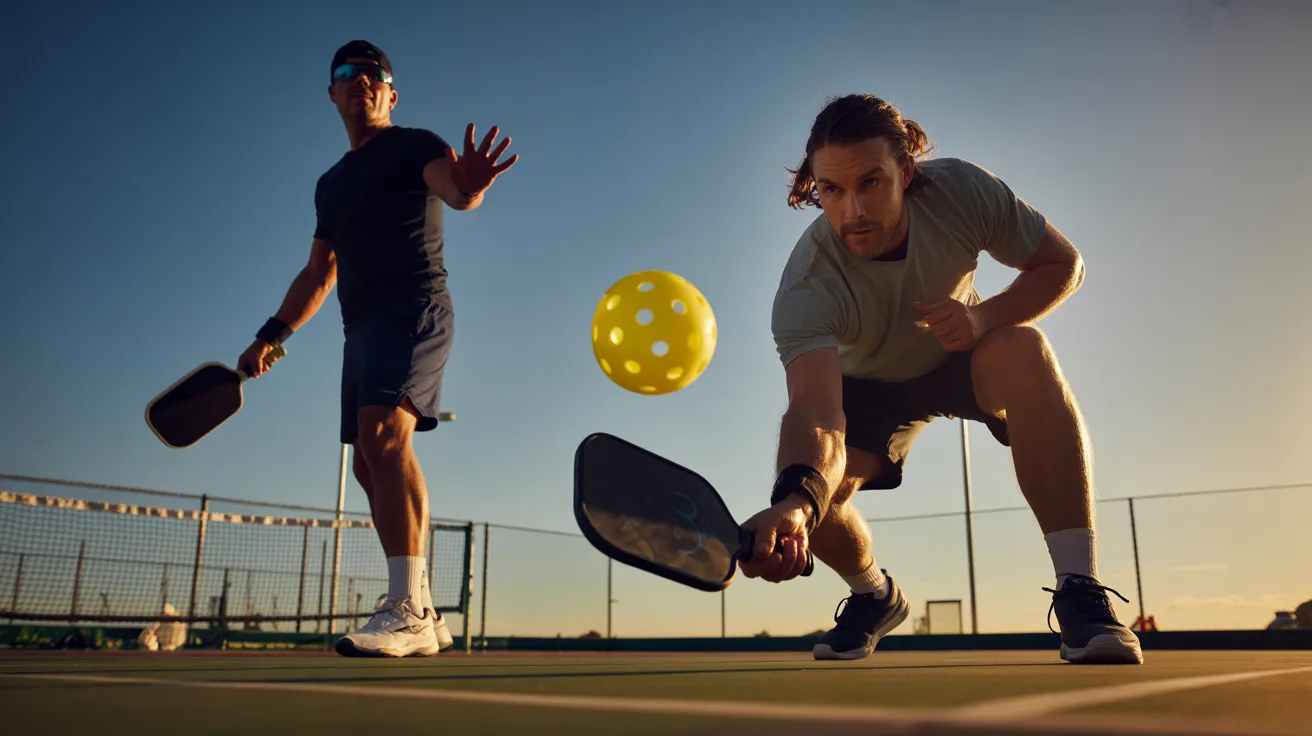
There’s something unmistakable about the moment you step onto a pickleball court. The lines are small, the paddle feels light, and you think, This won’t be too intense.
Then the first rally hits. Suddenly you’re lunging, shuffling, reacting, and trying to keep up with a ball that never seems to bounce as high as you expect.
That first game can be brutal and you can injure yourself on the pickleball court….If your body isn’t ready.
What most players don’t realize is how much smoother, sharper, and more controlled their opening minutes would feel if they took just five of them to wake up their joints, switch on their reflexes, and prime their footwork.
You don’t need a “workout.” You just need a quick system that tells your body, We’re about to move fast.
This warm-up isn’t about complexity. It’s about connection — connecting your brain to your feet, your balance to your paddle, and your timing to the pace of the game.
The Ultimate Pickleball Warm Up
The Science Behind Fast Warm Ups That Actually Work
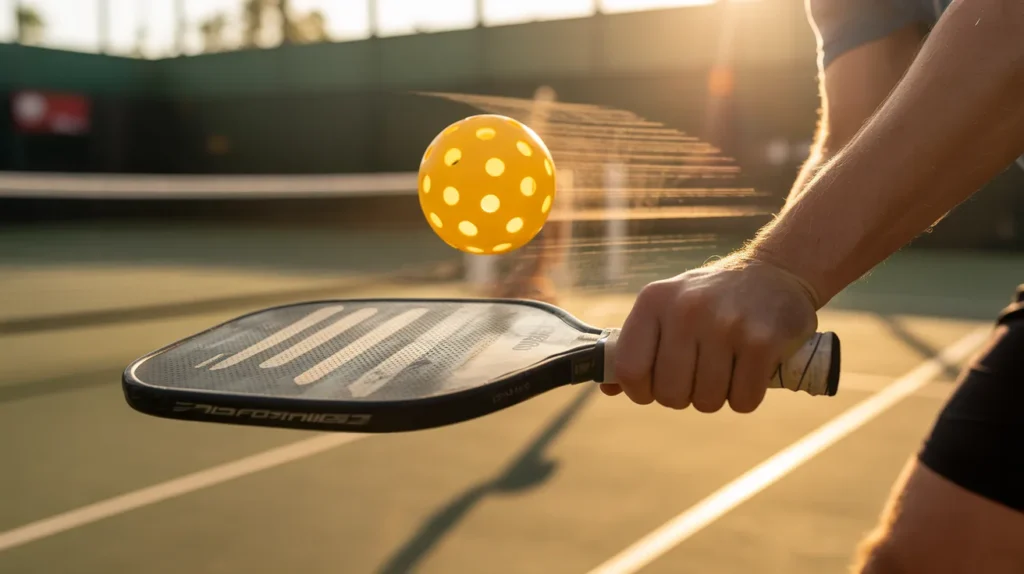
Pickleball might look relaxed from the outside, but inside the lines, it’s all about rapid changes in direction, lightning footwork, and tiny bursts of power that come out of nowhere.
Here’s what your body has to handle as soon as that ball comes your way:
-
Quick lateral shuffles
-
Abrupt stops and pivots
-
Short sprints to the kitchen
-
Tight shoulder rotations
-
Instant reaction to unpredictable bounces
Most people step onto the court stiff — ankles asleep, hips barely moving, shoulders cold. That’s how missteps, strains, and sluggish starts happen.
Static stretching won’t fix that. In fact, it slows you down.
What your body actually needs is:
Neuromuscular Activation
Waking up the communication pathways between your brain and muscles so they fire faster.
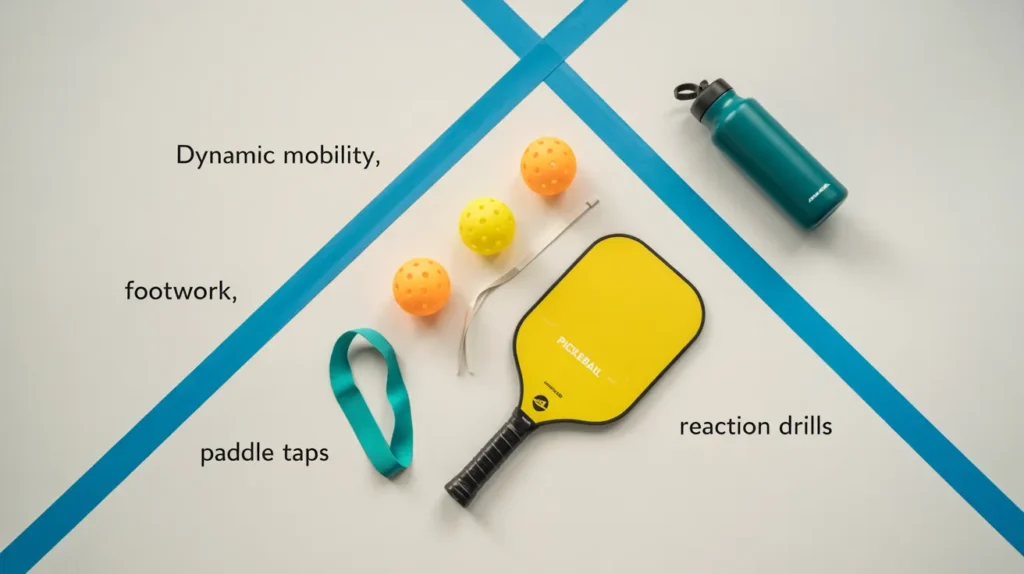
Dynamic Mobility
Moving joints through controlled motion, not frozen positions.
Fast-Twitch Readiness
Preparing your legs, feet, and shoulders for the speed pickleball demands.
This five-minute routine does all of that — without feeling like a warm-up at all.
The 5-Minute Fast Pickleball Warm Up Routine
Five minutes is enough to change how your entire first game feels — lighter steps, smoother transitions, quicker hands, cleaner contact. Everything below is simple, purposeful, and performance-driven.
0:00–1:00 — Dynamic Mobility (Shoulders, Hips, Ankles)
Shoulder Circles (20 seconds)
Loosen your shoulders in slow arcs, both directions. These are your stabilizers for volleys, drives, and overheads.
Hip Openers (20 seconds)
March the knee up, circle it outward. Your hips drive every side step, pivot, and lunge in the game.
Ankle Rolls (20 seconds)
Smooth circular motion, both ways. Most early-game wobbles come from stiff ankles.
Arm Sweeps + Torso Rotations (20 seconds)
Wide, easy swings that warm the shoulders and unlock your midsection.
This first minute is about letting your joints wake up before the real movement begins.
1:00–2:30 — Explosive Footwork Activation (Shuffles + Split-Step)
Your feet dictate everything in pickleball. When they’re half-asleep, your paddle always feels late.
Fast Lateral Shuffles (45 seconds)
Short, sharp side steps. Stay low. Be quiet on your feet. Feel the legs turn on.
Forward–Backward Micro Bursts (30 seconds)
Three quick steps up, three back. This mimics rushing to the kitchen and retreating after a reset.
Split-Step Activation (15 seconds)
Little hops into a ready stance every second or two. It’s the heartbeat of good reaction time.
This section flips your movement system from “walk mode” to “game mode.”
2:30–3:30 — Paddle Activation (Feel, Control, Precision)
Once your feet wake up, your hands need to catch up.
Paddle Bump Taps (30 seconds)
Light taps straight up and down. No chasing the ball — let your hand soften and adjust.
Alternate Side Taps (30 seconds)
Forehand, backhand, forehand, backhand. Controlled, steady, rhythmic.
This minute tightens the connection between your paddle and your instincts.
3:30–4:00 — Reaction Boost (Partner or Solo)
With a Partner: Ball Drop Drill
They drop a ball from shoulder height. You catch it after one bounce. Simple but surprisingly fast.
Solo Option: Bounce Tap Drill
Drop the ball, tap it quickly off the bounce 3–4 times. Stay light on your feet.
These drills sharpen the exact reaction pathway you use in real rallies.
4:00–5:00 — Mini Rally or Dink Prep
This last phase bridges warm-up and gameplay — it’s where your timing clicks in.
Choose your style:
Dink Triangles
Soft shots around three kitchen targets.
Mini-Volley Exchanges
Controlled, steady volleys — not full power.
Shadow Rallies (Solo)
Simulate volleys and resets using footwork + paddle timing.
By the end of this minute, your body feels ready — calm but sharp, loose but responsive.
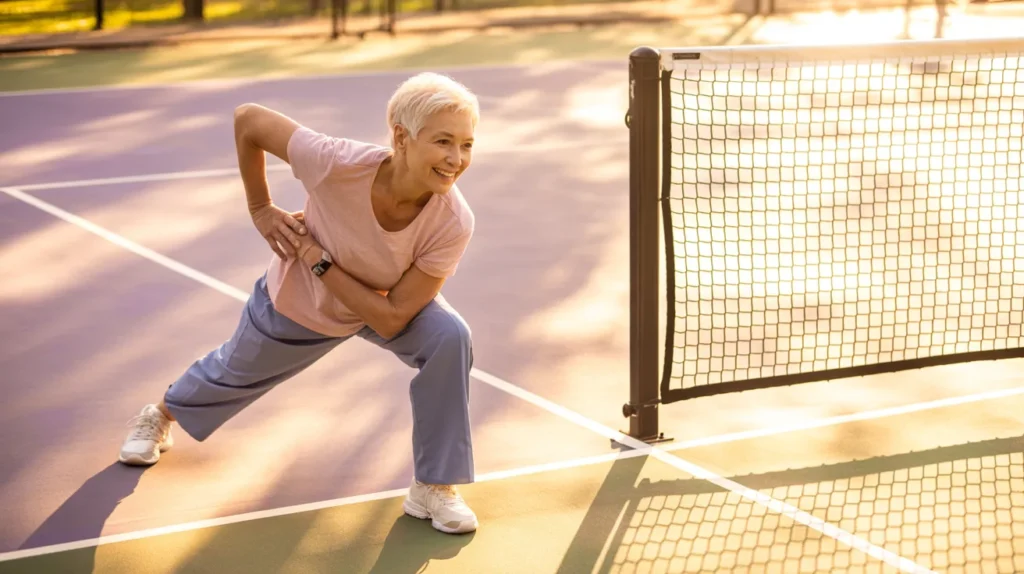
Warm Up Variation for Seniors & Beginners
If you’re newer to the sport or your joints need a gentler start, these adjustments keep the warm up friendly without losing the benefits.
For Seniors
-
Replace fast shuffles with smooth, gliding side steps
-
Add an extra 20 seconds of ankle mobility
-
Use slower marching steps instead of micro sprints
-
Focus more on paddle feel than quickness
For Beginners
-
Slow everything down by 10–20%
-
Reduce rotation until your balance improves
-
Repeat paddle taps instead of speeding up drills
Everyone’s body is different, but the goal is the same: move better, earlier.
What to Do After the Warm Up (Pre-Game Flow)
Once your body is fully awake, ease into play with a three-part sequence that syncs your movement with your technique:
1. Dinks First
Soft shots bring your timing online.
2. Transition Shots
Mid-court resets link footwork + control.
3. Gentle Mini-Volleys
Light contact prepares your hand speed without overwhelming your joints.
This tiny bridge drastically reduces unforced errors in the first game.
FAQ Reinforcement Loop
How long should a pickleball warm up take?
Five minutes is all you need if the movements are sharp, dynamic, and sport-specific.
Should I stretch before playing?
Skip static stretching until after you finish playing — it slows reaction time.
What if I only have one minute?
Do shoulders → shuffles → paddle taps. Even 60 seconds makes a noticeable difference.
Why do I feel stiff early in games?
Your ankles, hips, and shoulders aren’t activated. This routine fixes that.
Products / Tools / Resources
Here are a few simple items that can make warm ups more effective and enjoyable:
-
Resistance bands — perfect for quick shoulder activation
-
Lightweight pickleballs — Onix Pickleball Outdoor Balls, easier for precision drills
-
Court-friendly training cones — 7″ Plastic Cones that are great for shuffle drills
-
Portable paddle covers — Palms-O-Aces Pickleball Paddle cover to keep your paddle safe and grippy
-
Compression sleeves — BLITZU Calf Compression Sleeve for Men & Women that gives added joint support for your calves. Also look at those for ankles, knees, or elbows.
-
Cross-training shoes with lateral stability — Reebok Nano X4 Men’s Shoes, are an ideal choice for essential for clean footwork
- The Ultimate Pickleball Cardio Workout Plan to Transform Your Heart Health
Disclosure: As an Amazon Associate, I earn from qualifying purchases.