If you’ve recently stepped onto a pickleball court, you already know why America can’t get enough of this sport. It’s social, fast, strangely addictive—and surprisingly physical.
What most new players don’t realize is that the movements that make pickleball so fun can also catch the body off guard. A quick twist here, an eager lunge there, and suddenly a harmless rally becomes the start of an avoidable injury.
The good news? You don’t need elite athleticism or years of training to stay safe. You just need a few foundational habits that protect your joints, sharpen your awareness, and help your body move the way pickleball asks it to.
The Complete Beginners Guide to Avoiding Pickleball Injuries on the Court guide walks you through those habits with the clarity and confidence every beginner deserves.
The Complete Beginners Guide to Avoiding Pickleball Injuries on the Court
Why Beginners Are the Most Injury-Prone Players
When people talk about pickleball injuries, they often imagine older players or over-competitive matches. But beginners—no matter the age—are actually the ones who run into the most trouble. And it often starts before they even realize they’re doing anything risky.
Excitement Turns Into Overexertion
Pickleball has a way of making you forget you’re exercising. The bursts of speed, the quick rallies, the “just one more game” feeling—it all adds up. New players push harder than their bodies are ready for, and fatigue quietly chips away at proper form.
Technique Takes Time to Develop
What looks simple—moving laterally, swinging lightly, reacting fast—requires mechanics your body isn’t used to yet. Without those mechanics, joints absorb stress they’re not prepared to handle. Beginners often don’t notice the strain until soreness shows up days later.
The Essential Safety Foundations Every New Player Must Learn
Before you think about mastering spin shots or drop volleys, it’s worth learning the fundamentals that keep you upright, balanced, and injury-free.
Move With Control Instead of Chaos
Think of pickleball footwork as controlled quickness rather than frantic chasing. Short steps give you more stability than big lunging strides. Keeping your knees bent—not locked—helps your spine stay neutral and ready to react. Small posture changes like these take pressure off the joints that usually complain first.
Handle Your Paddle Without Punishing Your Wrist
A paddle that’s too heavy or held too tightly forces the wrist and elbow to work overtime. Beginners often grip the paddle like it’s trying to escape. Relax the hand. Let the arm guide the paddle. And choose a weight and grip size that feel natural rather than “powerful.”
See the Court Before It Surprises You
Most injuries have one thing in common: the player didn’t see it coming. The preventable culprits include:
-
Backpedalling instead of turning safely
-
Drifting into your partner’s space
-
Chasing balls too close to fencing or barriers
Good court awareness isn’t instinctive—it’s learned. But once it clicks, movement becomes smoother and much safer.
Simple Warm-Up Routines That Protect Your Body
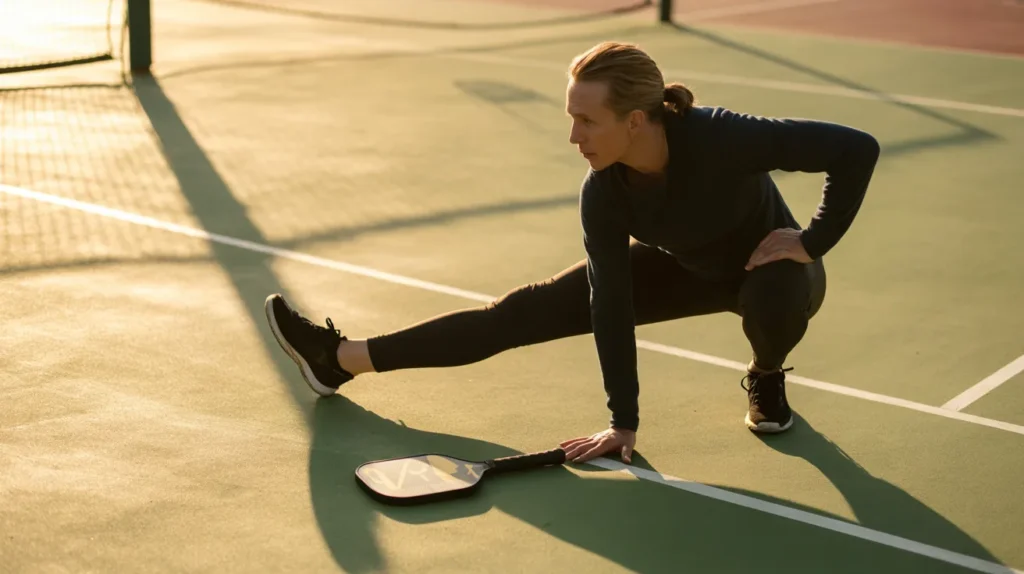
If you go from sitting in the car to sprinting for a shot, your muscles don’t stand a chance. A short warm-up primes the body for the twists, turns, and stops that define pickleball.
Start With Mobility That Wakes Up Your Joints
Think small, smooth, and controlled:
-
Roll your ankles
-
Loosen your hips with gentle openers
-
Circle your shoulders backward
-
Use light spinal twists to reduce stiffness
These tiny movements switch your body from “rest” to “ready.”
Add Light Cardio to Bring Everything Online
A couple minutes of easy motion make a huge difference:
-
Quick, relaxed walking
-
Side-to-side shuffles
-
A bit of light skipping
This warms the muscles and gets the nervous system tuned for faster play.

Common Beginner Injuries—and the Simple Ways to Avoid Them
Pickleball injuries follow patterns. Understanding those patterns helps you eliminate them before they start.
Wrist Strain
Beginners rely too much on wrist flicks, especially at the net.
Avoid it by: keeping a neutral wrist, loosening your grip, and letting the shoulder and elbow guide the paddle.
Slips and Falls
The most universal beginner mistake is backpedalling for a lob.
Avoid it by: turning and running safely instead, wearing court-friendly shoes, and keeping your stance low and balanced.
Rotational Tightness
Fast twisting without preparation can irritate the lower back or obliques.
Avoid it by: warming up your rotation and strengthening the muscles that support rapid turns.
Build Confidence Through Safe, Smart Practice
Confidence doesn’t just make you a better player—it makes you a safer one. When you feel in control of your movement, you stop making the desperate, off-balance motions that lead to sudden pains and lingering soreness.
Smart practice looks like:
-
Slowing down drills long enough to learn real control
-
Getting comfortable with proper footwork
-
Listening to fatigue signals instead of pushing past them
-
Practicing safe deceleration, not just acceleration
Pickleball rewards patience as much as power. The more tuned in you become, the more effortless your game—and your body—will feel.
Products / Tools / Resources
-
Lightweight pickleball paddles (ideal for reducing wrist and elbow strain)
-
Court-specific shoes with strong lateral support – K-Swiss Men’s Express light and Skechers Women’s Viper Court Pro Pickleball Sneaker
-
Resistance bands for shoulder and hip warm-ups
-
Foam rollers to loosen tight quads, glutes, and lower-back muscles – FITINDEX Vibrating Foam Roller
-
Beginner pickleball lesson videos focused on safe movement patterns
- The Ultimate Pickleball Warm Up: 5-Minute Routine for Faster Footwork & Better Shots
Disclosure: As an Amazon Associate, I earn from qualifying purchases.